Trial drive
$50
Ages 4½ to 16
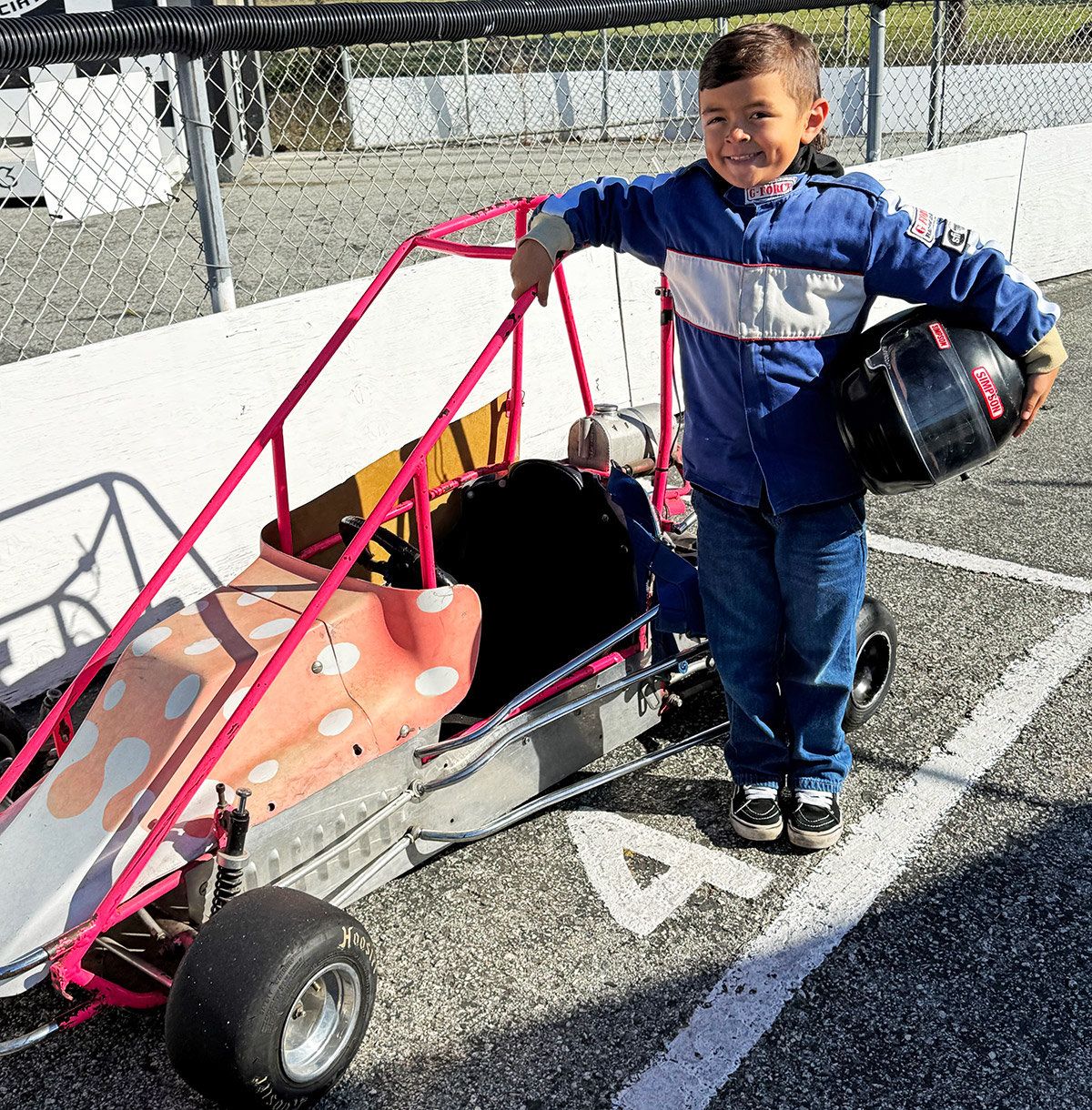
Find out if racing is for your child. We start with instruction and a track walk, then your child drives one of our cars for 10–15 laps. You'll learn about the cars, the rules, the track and the club, and what you'd need to race.
After you buy, the club will be in touch to set a date.
Get started
From first lap to race day
Where the trial drive leads.
- 1You’re here
Trial drive
$50 · ages 4½ to 16. Instruction, a track walk and 10–15 laps in a club car.
- 2
Training
Three or more sessions: one-on-one first, then lineups with other drivers.
- 3
Join the club
Memberships from $25 a year, plus NASCAR Youth Series (USAC.25) membership.
- 4
Race
Enter club races online, right up to the end of race day.
Questions
After the trial drive
What happens after the trial drive?
You decide whether you want to keep going. There's no commitment from the trial drive itself. If you do, sign up for training: drivers train in club cars and club gear, so you don't need a car or gear of your own yet.
What does training cover?
Everything a driver needs before racing with others: the car's switch, brakes and belts, and keeping both hands on the wheel; every flag and hand signal; getting on and off the track; driving the racing line; reacting to something sudden in front of the car; passing safely; forming up for a start; and qualifying. Handlers learn alongside their driver, including when and how to step onto the track.
How long does training take?
As long as the driver needs. Training continues until the driver can show they control the car safely, respond to flags and on-track instructions, and do everything racing asks of them, from forming up to qualifying. Most drivers need three or more sessions: one-on-one first, then on track with other drivers.
Who decides a driver is ready to race?
The club's Training Director tells the Novice Advancement Committee (the club President, Technical Director, Safety Director and Training Director) when a driver is ready, and the committee approves the move. The same committee decides when a novice moves up to a competitive class.
What is the novice class?
Novice is the learning class every new driver races in first. It has two stages: Red Rookie, where drivers learn safety, communication and race procedures, then Blue Rookie, where they get used to racing with others at speed. Novice races have at most eight cars and a safety person at every corner. A driving mistake sends the driver to the back of the restart, with an explanation, rather than a black flag. Every novice gets a participation award at each main event, and novices don't race for season points.
Do I need my own car?
Not for training: the club provides the car and gear. To race, you'll need a car, and most new drivers start in a used one. Used cars come up for sale at different times of the year as older drivers move on, and the club will point you to cars for sale and help you check one over, including making sure the engine is legal, before you buy.