Get started
Your child's path to racing
No experience needed. Here's how it works, one step at a time.
Step 1
Book a trial drive
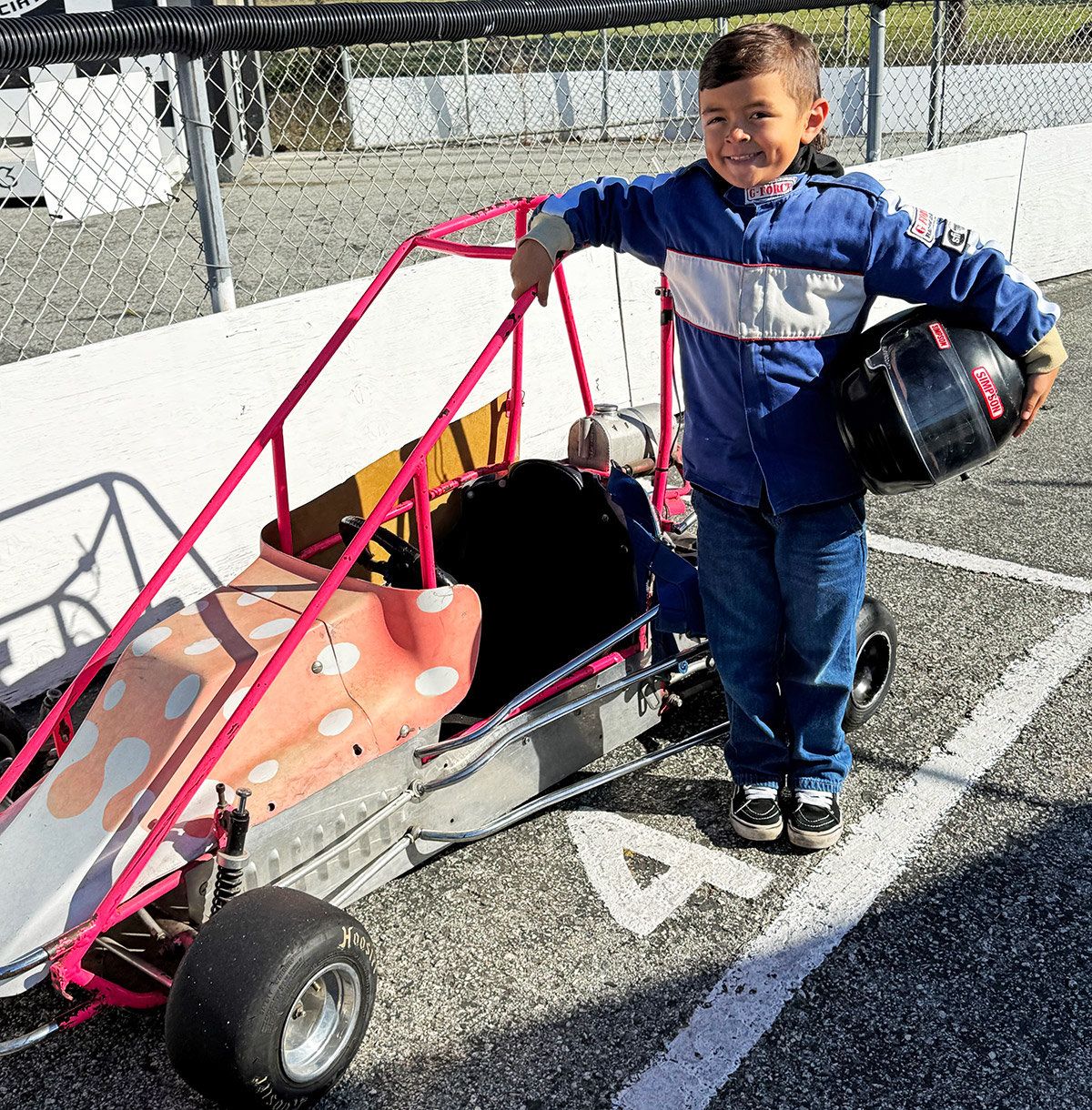
Find out if racing is for your child. We start with instruction and a track walk, then your child drives one of our cars for 10–15 laps. You'll learn about the cars, the rules, the track and the club, and what you'd need to race.
We provide all the safety gear. Your child just needs long pants and closed-toe shoes.
- Cost
- $50
- Ages
- 4½ to 16
Step 2
Learn in our training program
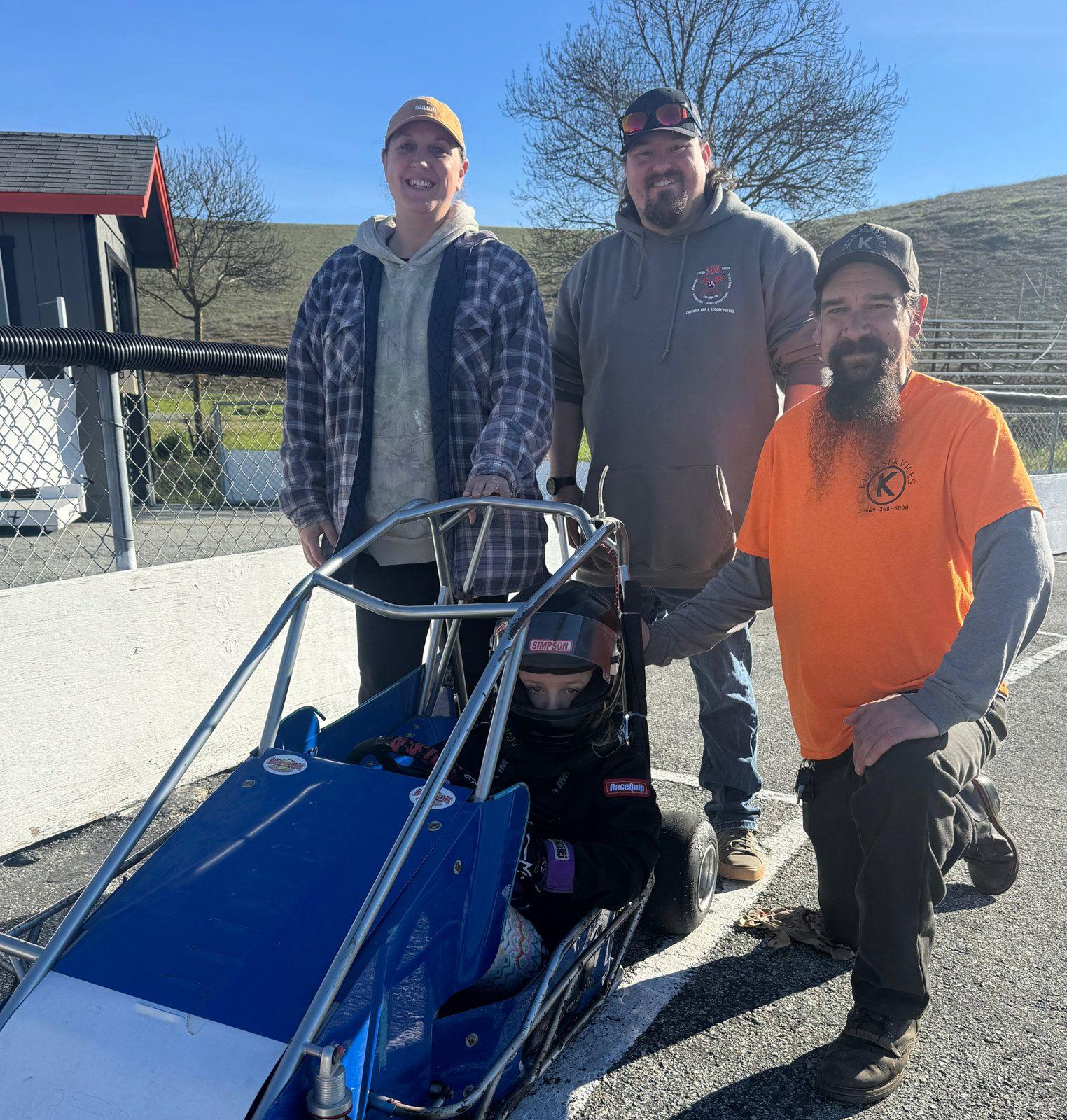
After a trial drive, our training program gives new drivers the strongest possible start. Training is usually three or more sessions; every child moves at their own pace.
Drivers start with one-on-one sessions of 30–40 minutes on racing fundamentals and safety, for both driver and handler. When the trainer says they're ready, they move to lineups training with other drivers: race procedures, starting positions and passing. This is a good time to get your own car.
Once the trainer confirms the driver is confident and competent in lineups, they graduate and are ready to race.
The club provides race cars and a full set of safety equipment: helmet, jacket, gloves, neck brace and arm restraints. If you have your own gear, check with your trainer that it meets current NASCAR Youth Series (USAC.25) safety rules.
Using a club car
$100
Using your own car
$50
Step 3
Join the club
Racing needs two memberships, both renewed every year:
- NASCAR Youth Series (USAC.25), the national sanctioning body. Every driver and handler needs one.
- Baylands QMA club membership, renewed by November 1.
Step 4
Enter your first race
Every race has its own page with the schedule and an Enter button. Entries are per car, per driver. One waiver covers the whole season. Before race day, make sure every driver and handler has signed the track waiver.
See upcoming racesQuestions
What to know before you race
What happens after the trial drive?
You decide whether you want to keep going. There's no commitment from the trial drive itself. If you do, sign up for training: drivers train in club cars and club gear, so you don't need a car or gear of your own yet.
What does training cover?
Everything a driver needs before racing with others: the car's switch, brakes and belts, and keeping both hands on the wheel; every flag and hand signal; getting on and off the track; driving the racing line; reacting to something sudden in front of the car; passing safely; forming up for a start; and qualifying. Handlers learn alongside their driver, including when and how to step onto the track.
How long does training take?
As long as the driver needs. Training continues until the driver can show they control the car safely, respond to flags and on-track instructions, and do everything racing asks of them, from forming up to qualifying. Most drivers need three or more sessions: one-on-one first, then on track with other drivers.
Who decides a driver is ready to race?
The club's Training Director tells the Novice Advancement Committee (the club President, Technical Director, Safety Director and Training Director) when a driver is ready, and the committee approves the move. The same committee decides when a novice moves up to a competitive class.
What is the novice class?
Novice is the learning class every new driver races in first. It has two stages: Red Rookie, where drivers learn safety, communication and race procedures, then Blue Rookie, where they get used to racing with others at speed. Novice races have at most eight cars and a safety person at every corner. A driving mistake sends the driver to the back of the restart, with an explanation, rather than a black flag. Every novice gets a participation award at each main event, and novices don't race for season points.
When do drivers move up to a competitive class?
When they're comfortable with lineups, racing in traffic and everything else a competitive class asks, and the Novice Advancement Committee approves. Drivers race at least three novice events first, at least one of them in Red Rookie. On their first competitive day they start each race at the back, and they race three events in a Honda or Animal class before moving to any other class.
Do I need my own car?
Not for training: the club provides the car and gear. To race, you'll need a car, and most new drivers start in a used one. Used cars come up for sale at different times of the year as older drivers move on, and the club will point you to cars for sale and help you check one over, including making sure the engine is legal, before you buy.
How young can drivers start?
Drivers can train from 4½ and race from 5.
What does a race day look like?
Safety inspection and sign-in run from 7:30 to 8:30 am, then the pit meeting. Practice starts at 9:00, followed by qualifying, heat races, main events, technical inspection, track clean-up and trophies.
What does it cost to race?
Each club race is $40 per car per driver for each class entered, the same for novice and competitive classes. On top of that are your club and USAC.25 memberships, your car and gear, and parking, which is set by Santa Clara County Parks.
What do members help with?
Race days run on members. Every race, each member signs up for a job: flagging, pit steward, scales, scoring, lap counting or the snack bar. A full membership also includes 16 work-party hours and 16 snack-bar hours across the season, split between the first and second half of the year. You can pay $150 for each half-year requirement you don't complete.
What should we read before racing?
The club's race rules, the NASCAR Youth rulebook and the Rookie Training Program. You'll find all three on the Documents page. Your trainer will go through what matters most.